
There are different ways to create a splash effect for photography. You can send a drop down to hit a hard surface and if the surface is reflective you will get a mirror image of the splash. If you drop a drop of water into a pool of water the surface tension will push the water drop back up creating a Colum and eventually breaking off and shooting a drop upward. If you send a second drop down at the right time you can create a collision of two drops. Another method I have used is to create a raised puddle where the splash takes place. This creates a interesting effect when it spills down off the edge.
The collision happens faster than a blink of an eye. In order to capture the collision you need to shoot in a very dark room with the shutter open. You can set a speed flash faster than one can set the shutter of a camera. So the process is you turn off the lights open the shutter in bulb mode and then send your drops. At the precise time the flash gun will fire a burst of light that will give the light for the exposure. In order to get the timing correct I use an electronic module that connects to both the speed flash and to the electronic dropper. With this module I can determine how long to open the valve (determine the size of the drop). When the drop passes below the senor below I have a few options. I can set a timer or a second trigger. The second trigger may be the speed flash or it may be the water valve again. In order to get a two drop collision the process would be as follows. Open shutter, drop first drop, delay for x milliseconds, drop second drop, delay x milliseconds, fire speed flash, close shutter.

This photo shows the StopShot module used to set the timers / triggers. I use my CamRanger to connect the camera to the iPad. This allows me to access all the camera settings as well as preview previous shots without touching the camera.

This photo shows the liquid reservoir, electronic valve and the sensor below.


This is the setup used to capture the photo on the right. I used two high gloss black ceramic tiles as the base and backdrop. This gives a good mirror effect of the splash with a nice dark background.

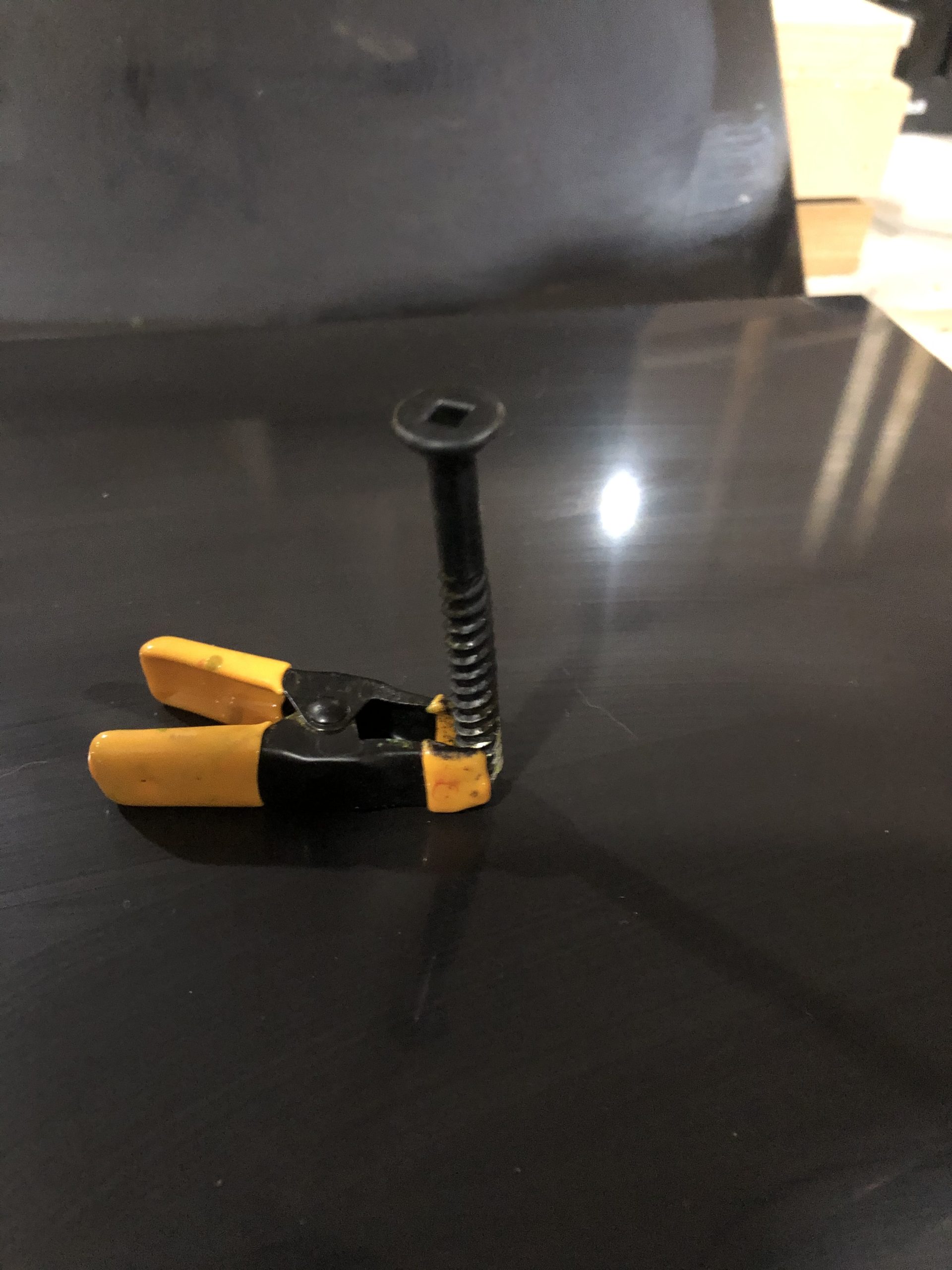


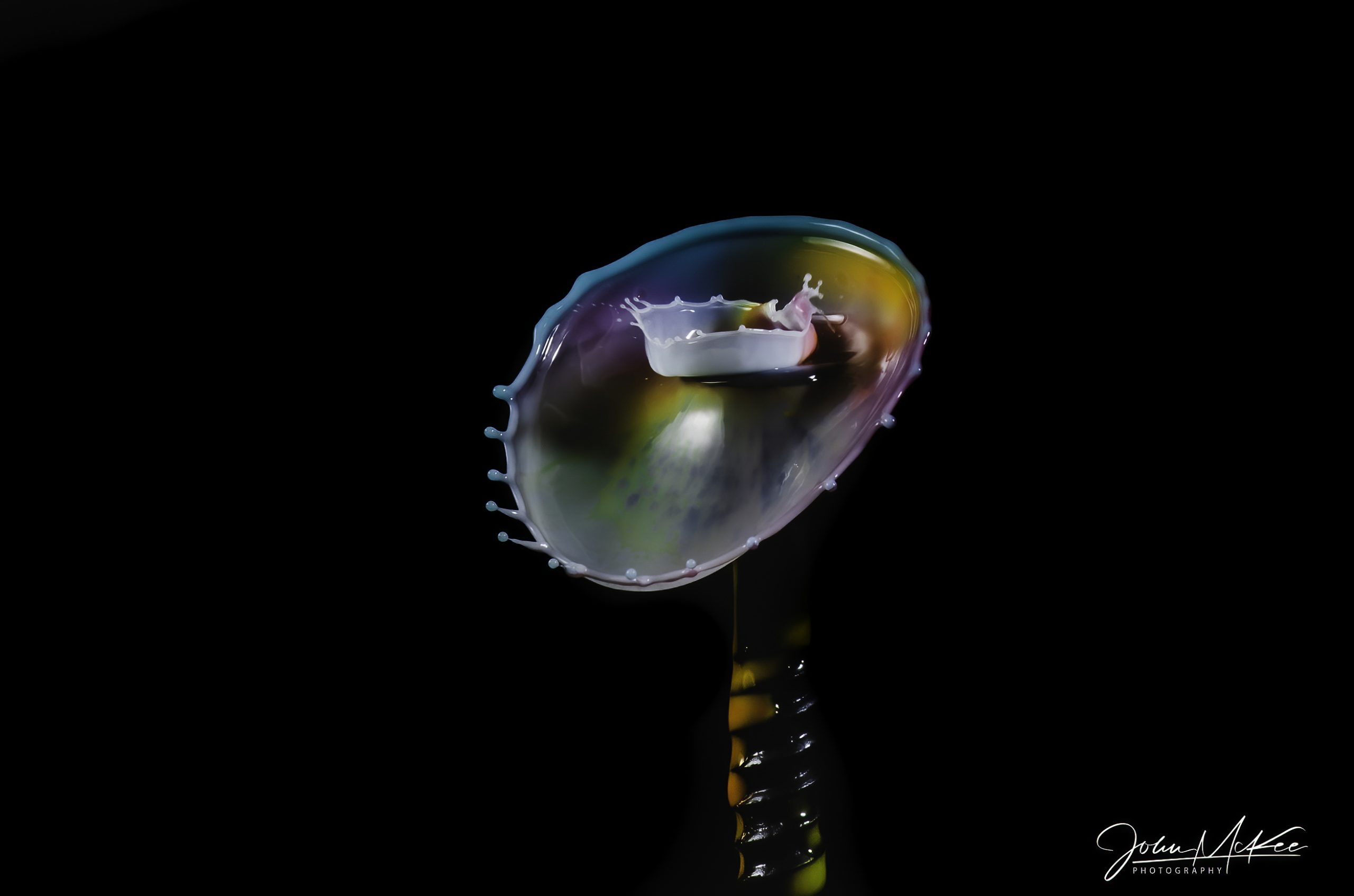

To create the photo on the right I started by painting a screw black. I am using some old eggnog on the screw and dropping milk from the top. The two liquids have different viscosities and will react differently during the collision. I start buy building a large puddle on the top of the screw with different colours of eggnog then hit it with a drop of milk. In post processing erase the screw to end up with only the drop.
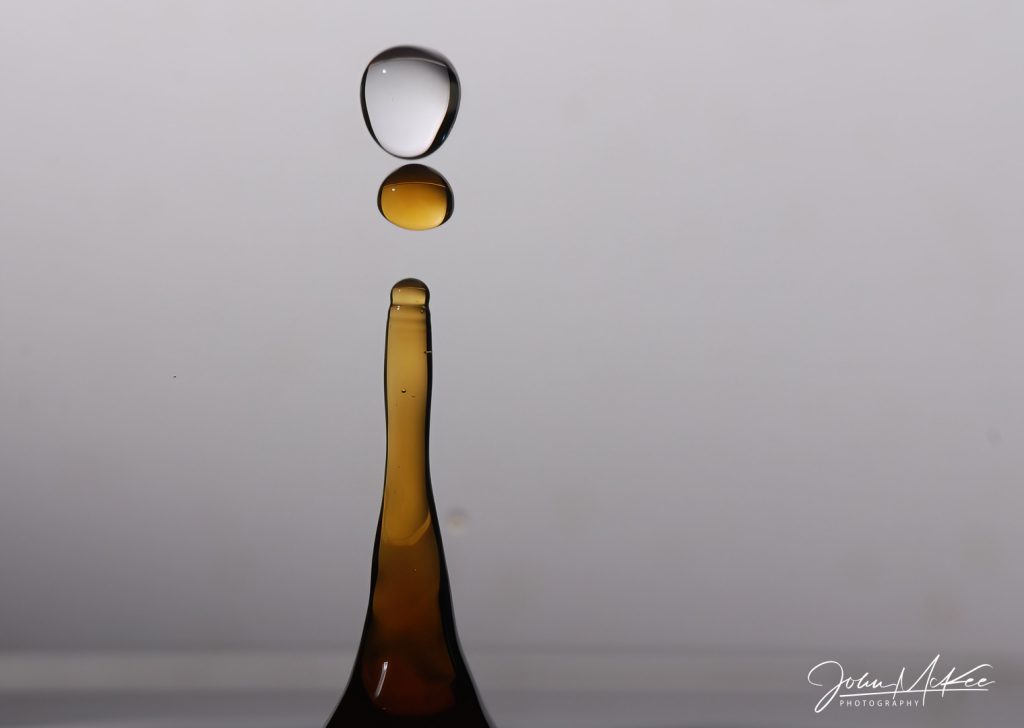

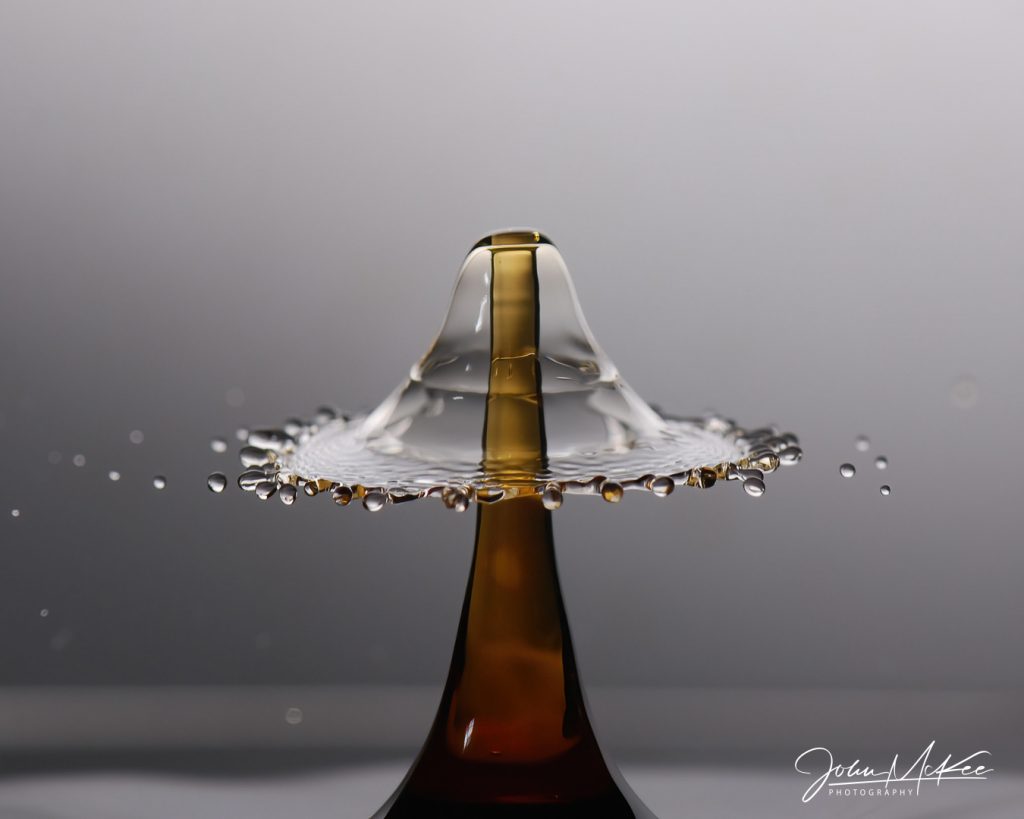
When a drop of water lands in liquid it sinks down making a hole on the surface. Surface tension wants to close this gap. When it does, it pushes a pillar of water upward and will eventually separate sending a drop upward. If you send a second drop downward at the correct time the two drops will collide. The three photos above are taken just milliseconds apart. As I delay the time the drops get closer, eventually colliding as in the middle photo. Delay it even further and you an make an umbrella effect. In this photoshoot I am dropping water into a glass of coffee.